Knowledge is a network
A note is more than a file in a folder. Sources, agreements, tensions, and contradictions connect it to everything around it.
 See the Forest
 A Knowledge Evolution System
See the Forest connects your working notes, so ideas can be revisited, tested, and published for people and agents.

A note is more than a file in a folder. Sources, agreements, tensions, and contradictions connect it to everything around it.
Agents can find relationships and compare old and new material. You decide what deserves to become part of your thinking.
People enter through the atlas and articles. Agents use structured interfaces. Both reach the same writing and relationships.
New material can strengthen, revise, or overturn an old conclusion. See the Forest keeps that exchange alive instead of flattening the work into another summary.
The relationships between ideas are part of knowledge.Keep the note system you already use. Writing, organizing, connecting, revisiting, and publishing become one practice you can sustain over time.
Preserve the original material, your notes, and their sources in familiar Markdown files.
Use links and semantic relationships to record why one note belongs with another.
Test new material against earlier thinking, then decide what should be added, revised, or rejected.
Share only what you choose, letting readers see the whole before they enter a single article.
Vault maintains the knowledge. Blog publishes it. Atlas makes the network visible. All three work from the same body of content.
Maintain source material, structure, and relationships while preserving how your thinking changes.
Publish selected notes as articles, topics, search, and content that agents can read.
Return topics and articles to the whole, making real relationships the main way to browse.
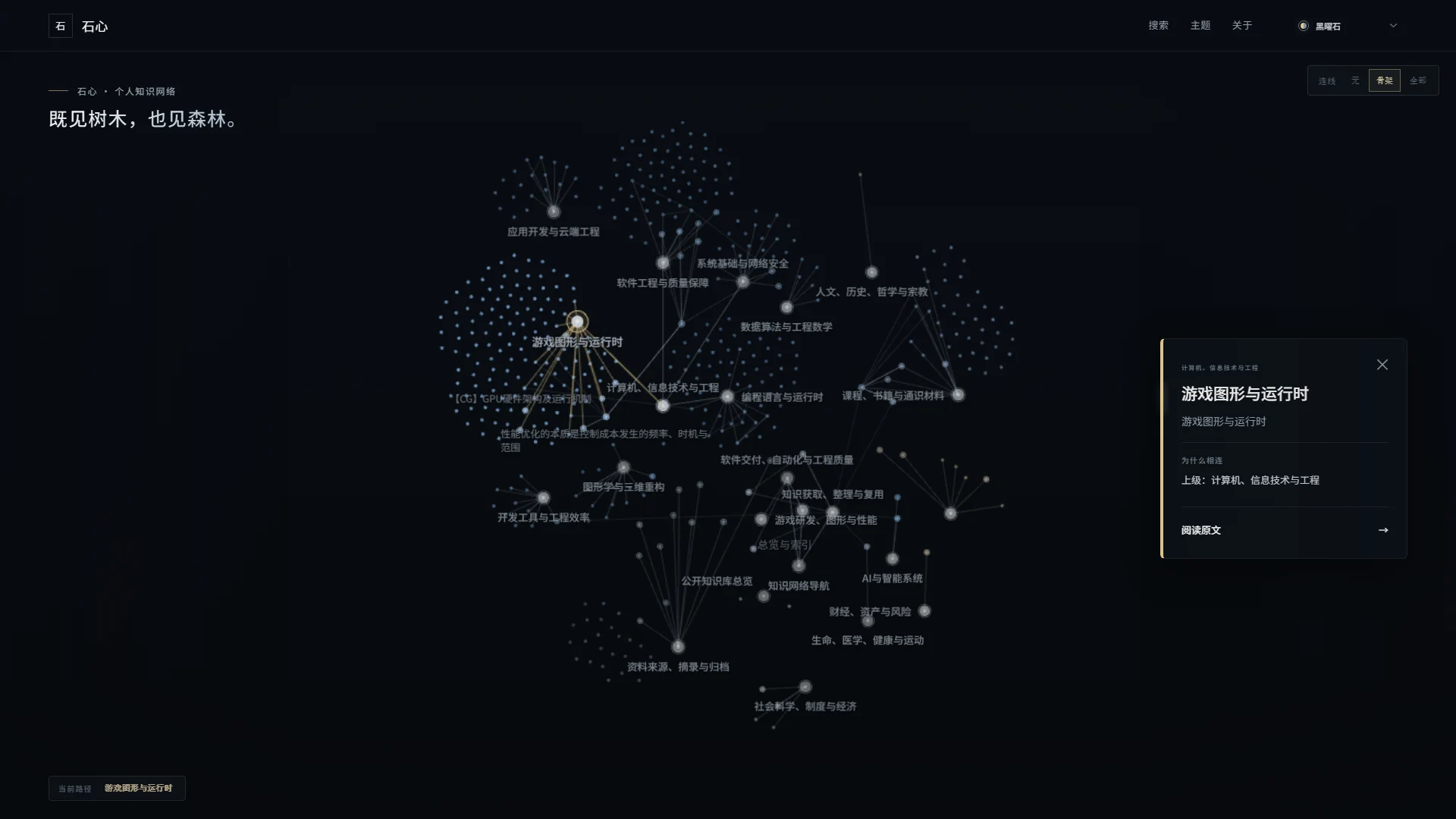
Walk through it yourself
On pystone.net, follow two real connections before opening an article. The idea behind “See the trees. See the forest.” becomes clear once you move through it.
Explore the live knowledge network, Opens in a new windowIf collecting information is not enough, See the Forest offers a sustainable way to connect, revise, and publish what becomes your own understanding.
Bring new material back to old questions instead of letting it disappear into another folder.
Show where an argument came from and what sits around it, not only the latest post.
Keep the source clear, control what is public, and maintain the site without duplicate content.
Give agents access to sources, sections, relationships, and evidence instead of flattened page text.
Open pystone.net, begin with a topic you know, and follow the real connections from there.